
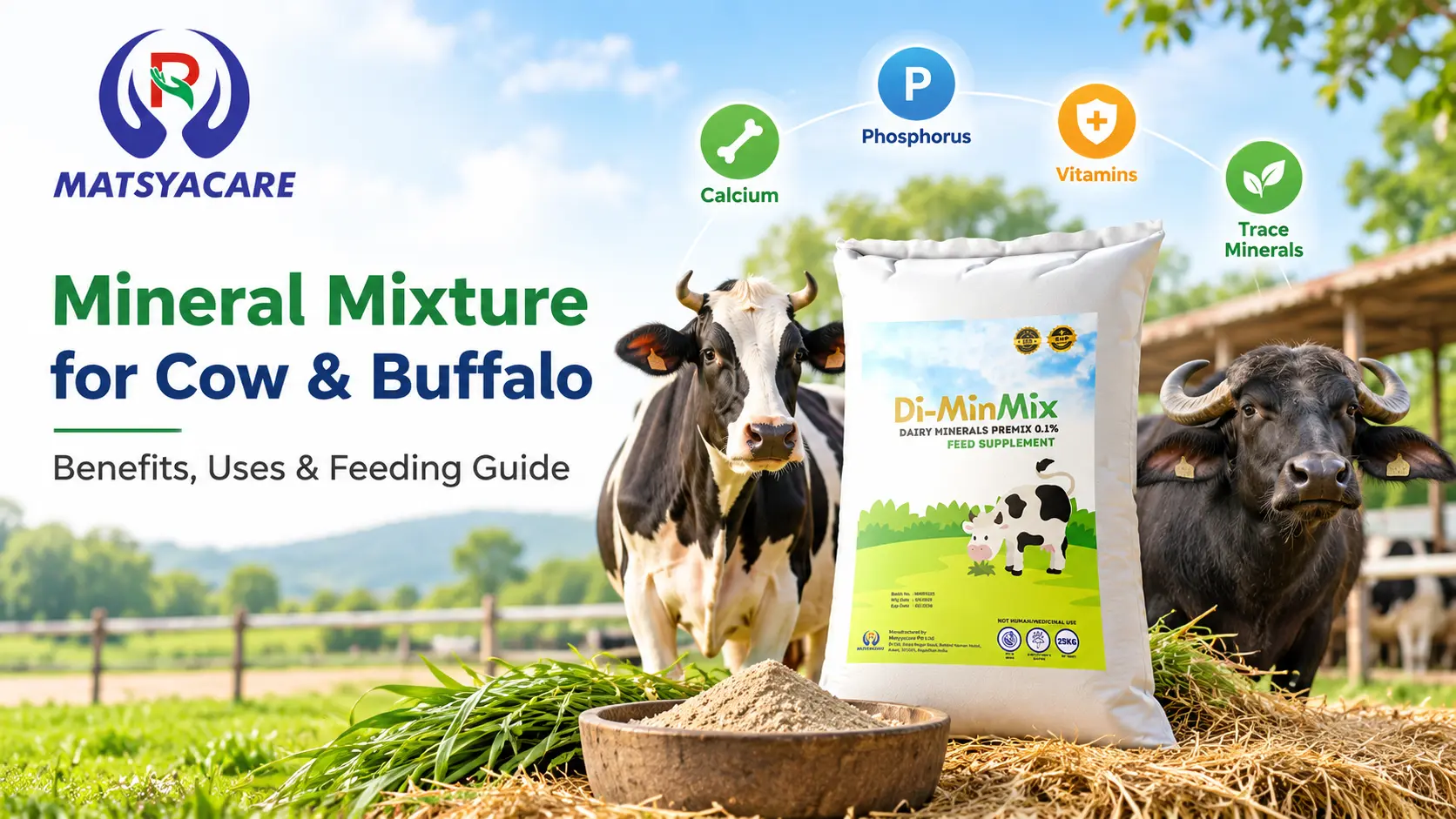
A healthy dairy cow needs more than green fodder and concentrate feed. Minerals are also an important part of its daily nutrition, supporting normal growth, bone strength, milk production and other essential body functions.
Although fodder and concentrates contain minerals naturally, the amount available to an animal can vary with feed quality, soil conditions and the overall ration. In some situations, a mineral mixture can help make up for nutrients that are not being supplied in sufficient quantities.
The same applies to buffaloes, particularly during pregnancy and lactation. However, the amount and type of supplementation needed may differ from one animal to another.
This guide explains when mineral mixtures are useful, what benefits they provide, how to include them in a feeding programme and what to consider when choosing a supplement for cows and buffaloes.
Why Do Cows and Buffaloes Need Mineral Mixtures?
Cows and buffaloes obtain most of their nutrients from fodder, grains, concentrates and other feed ingredients. A balanced ration should supply the energy, protein, vitamins and minerals needed for daily body functions and production.
However, mineral content is not the same in every feed. Green fodder, dry fodder and different concentrate ingredients can provide different amounts of calcium, phosphorus, magnesium and trace minerals.
A mineral mixture is used to supplement these nutrients when the regular diet does not supply enough.
Common minerals involved in dairy animal nutrition include:
- Calcium: Important for bones, muscle function and milk production.
- Phosphorus: Supports bone development and normal energy metabolism.
- Magnesium: Involved in muscle and nerve function.
- Zinc: Supports normal skin, hoof health and metabolic functions.
- Copper: Plays a role in enzyme activity and normal physiological functions.
- Manganese: Important for skeletal development and other metabolic processes.
- Selenium: Contributes to antioxidant defence and normal immune function.
The goal is not to provide as many minerals as possible. It is to supply the right balance according to what the animal already receives from its feed.
Benefits of Mineral Mixture for Dairy Cows and Buffaloes
Mineral supplementation is most useful when it helps correct a nutritional gap in the existing ration. Its benefits depend on the animal's condition, the quality of the regular feed and the formulation being used.
Supports Normal Milk Production
Producing milk places additional nutritional demands on dairy animals. Calcium, phosphorus, magnesium and several trace minerals participate in the processes needed for normal milk production.
When an animal's diet is deficient in essential minerals, appropriate supplementation can help improve the nutritional balance of the ration.
However, mineral mixtures should not be treated as products that automatically increase milk yield. Production also depends on feed intake, energy, protein, genetics, animal health and farm management.
Maintains Bone and Muscle Health
Calcium and phosphorus are essential for bone development and maintenance. Magnesium also contributes to normal muscle and nerve function.
These nutrients are important throughout an animal's life, especially during growth and periods of increased nutritional demand.
Supports Reproductive Health
Reproductive performance is influenced by overall nutrition, body condition, health and management.
Minerals such as zinc, copper, manganese and selenium are involved in several physiological processes associated with normal reproductive function.
A balanced mineral supply is therefore one part of good reproductive nutrition, alongside adequate energy, protein and appropriate veterinary care.
Helps Maintain Normal Growth and Body Condition
Growing cattle require an adequate supply of nutrients to support skeletal development and normal metabolism.
Mineral supplementation may be useful where the regular ration does not provide enough of the required nutrients, but it should complement rather than replace properly balanced feed.
Choosing a Mineral Mixture for Dairy Cows
The right mineral mixture for a cow depends largely on what the animal eats and its stage of production.
For example, a cow producing milk has different nutritional requirements from a dry cow or a growing heifer. Even two lactating cows may have different needs because of differences in body weight, milk production and feed intake.
Before choosing a supplement, it is useful to review the animal's current feeding programme.
For Lactating Cows
Lactating cows need sufficient minerals to support normal body functions and milk production. Their requirements may increase with higher milk output, but the amount of additional supplementation depends on how much is already supplied by the ration.
A farmer feeding green fodder, dry fodder and commercial concentrate should consider the mineral content of all these feeds before adding another supplement.
If the concentrate feed already contains a mineral premix, adding a separate product without checking the total intake may lead to unnecessary supplementation.
For Dry Cows
Dry cows are not producing milk, but they still need balanced nutrition for body maintenance and preparation for the next lactation.
The feeding programme should reflect their stage of pregnancy and body condition. A supplement intended for a high-producing lactating cow may not be suitable for every dry cow.
For Pregnant Cows
Mineral nutrition becomes especially important during pregnancy because the developing calf also requires nutrients.
In late pregnancy, calcium and other mineral requirements must be managed carefully as the cow approaches calving and the beginning of lactation.
This is not a stage where adding extra calcium or a general mineral mixture without reviewing the ration is necessarily beneficial. Transition-cow feeding may require a specially balanced mineral programme.
Farmers should discuss the appropriate supplement and feeding amount with a veterinarian or qualified animal nutritionist, particularly during the final weeks before calving.
Mineral Mixture for Buffaloes
Buffaloes also need a balanced supply of minerals for normal growth, maintenance, reproduction and milk production.
As with cows, the amount of supplementation required depends on the animal's age, body weight, milk yield, feeding system and stage of production.
A lactating buffalo receiving a properly balanced concentrate ration may need a different supplementation plan from a buffalo fed mainly on locally available fodder.
When selecting a mineral mixture for buffaloes, the main considerations are the composition of the regular diet, the animal's requirements and the recommended use of the product.
Some mineral supplements are formulated for both dairy cows and buffaloes. However, suitability should be confirmed from the product specifications rather than assumed from the product name alone.
How Much Mineral Mixture Should You Give?
There is no single daily amount suitable for every cow or buffalo.
The correct quantity depends on the concentration of the mineral mixture, the animal's body weight, its feeding programme and the amount of minerals already present in the ration.
For example, a concentrated mineral and vitamin premix used by feed manufacturers is not necessarily fed at the same rate as a ready-to-use mineral supplement intended for individual animals.
The following table explains why feeding recommendations can differ.
| Animal | What to Consider |
|---|---|
| Lactating cow | Milk production, body weight and mineral intake from the regular ration. |
| Dry cow | Stage of pregnancy, body condition and the dry-period feeding programme. |
| Pregnant cow | Pregnancy stage, existing ration and any specialised transition-feeding requirements. |
| Dairy buffalo | Body weight, milk yield, feed quality and the supplement's formulation. |
Always follow the feeding instructions provided for the specific product. If these are not available or the animal has special nutritional requirements, consult a qualified animal nutrition professional before deciding the daily quantity.
Giving more than the recommended amount does not necessarily produce better results. Excessive intake of certain minerals can disturb nutritional balance and may cause health problems.
How to Feed Mineral Mixture to Cows and Buffaloes
The feeding method depends on whether the product is a ready-to-feed mineral supplement or a concentrated premix intended for feed formulation.
For products designed for direct supplementation, the manufacturer may recommend mixing the specified quantity with concentrate or another suitable part of the animal's ration.
When using a mineral mixture, follow these basic practices:
- Read the product label and feeding directions before use.
- Measure the recommended quantity rather than estimating it.
- Mix the supplement evenly into the appropriate feed when instructed.
- Check whether the animal's concentrate feed already contains added minerals.
- Store the product in a clean, dry place according to the manufacturer's instructions.
- Review the feeding programme when the animal moves into a different production stage.
A concentrated feed-grade premix may require controlled mixing at a specified inclusion rate. It should not automatically be used as a direct daily supplement unless its instructions permit that use.
What Makes a Good Mineral Mixture?
With different supplements available in the market, choosing one based only on price or promotional claims may not give the best result.
The most suitable mineral mixture is one that complements the animal's existing diet and provides the nutrients needed in appropriate amounts.
Check the Mineral Composition
Look for clearly stated ingredients and mineral concentrations. Calcium, phosphorus, magnesium and trace minerals are common components, but the correct balance depends on the intended use.
Some formulations also contain vitamins, while others focus mainly on minerals.
Consider the Existing Feed
A cow receiving a complete commercial ration may already obtain much of its mineral requirement from the feed.
On the other hand, animals fed predominantly on farm-produced fodder may require a different supplementation approach depending on the nutritional content of that fodder.
Check Product Quality and Instructions
Choose products with clear composition, packaging, storage and usage information.
Where relevant, feed manufacturers and professional buyers should also review product specifications and quality documentation.
Understand Different Mineral Forms
Some mineral mixtures include conventional inorganic mineral sources, while others contain selected chelated or organic trace minerals.
These forms can differ in availability and utilisation, but a particular ingredient form does not automatically make a supplement suitable for every animal. The complete formulation and feeding programme remain important.
Mineral Mixture and Complete Cattle Feed: What's the Difference?
Complete cattle feed and mineral mixtures serve different purposes.
A complete feed is designed to supply a broader range of nutrients, including energy, protein and other essential components, according to the type of feed and feeding system.
A mineral mixture provides selected minerals, sometimes together with vitamins, to complement nutrients already present in the diet.
A mineral mixture cannot replace adequate fodder, concentrate feed, clean drinking water or a properly balanced ration.
Mineral and Vitamin Premix for Dairy Nutrition
Feed manufacturers and dairy nutrition professionals often use mineral and vitamin premixes when preparing balanced animal feeds.
These products are formulated to supply selected nutrients at specified inclusion levels and can be used in feed manufacturing according to their technical specifications.
Matsyacare offers a feed-grade Minerals and Vitamin Premix for animal nutrition applications.
The product contains minerals and vitamins and is listed in 1 kg and 25 kg pack sizes. Buyers should confirm its composition, recommended inclusion rate and suitability for their intended feeding programme before use.
Looking for a Mineral and Vitamin Premix?
Feed manufacturers, dairy nutrition professionals and animal feed businesses can contact Matsyacare for product details, composition information and bulk supply enquiries.
Enquire About Product SupplyFrequently Asked Questions
Can the same mineral mixture be used for cows and buffaloes?
Some formulations are suitable for both dairy cows and buffaloes. The correct product and feeding quantity should be selected according to the animal's needs, its regular feed and the manufacturer's recommendations.
How do I choose a mineral mixture for my cow?
Start with the cow's age, stage of production and existing ration. Check the mineral composition, intended use and feeding instructions. A veterinarian or animal nutritionist can help identify whether additional supplementation is needed.
Can pregnant cows be given mineral mixtures?
Pregnant cows need balanced mineral nutrition, but their requirements change as calving approaches. A mineral supplement should be selected as part of an appropriate pregnancy and transition-feeding programme rather than added without considering the complete ration.
Can a mineral mixture increase milk production?
Correcting a mineral deficiency may support normal milk production, but the response depends on the animal's overall nutritional status. Milk yield is also influenced by energy and protein intake, health, genetics and farm management.
Should mineral mixture be given every day?
Many supplementation programmes are designed around regular intake, but the frequency and amount depend on the product and feeding system. Always follow the manufacturer's instructions and the animal's nutritional requirements.
Is mineral mixture the same as a vitamin premix?
No. A mineral mixture primarily supplies minerals, while a vitamin premix supplies selected vitamins. Some products combine minerals and vitamins in one formulation. Their concentrations and recommended applications can differ.
Conclusion
Mineral mixtures can be a useful part of dairy nutrition when the regular diet does not provide all essential minerals in the required amounts.
For both cows and buffaloes, the most important consideration is the balance of the complete ration. The animal's age, pregnancy status, milk production and existing feed should guide the selection of a suitable supplement.
Whether you manage a dairy farm or formulate feed commercially, checking the product composition and following appropriate feeding recommendations will help you make better supplementation decisions.