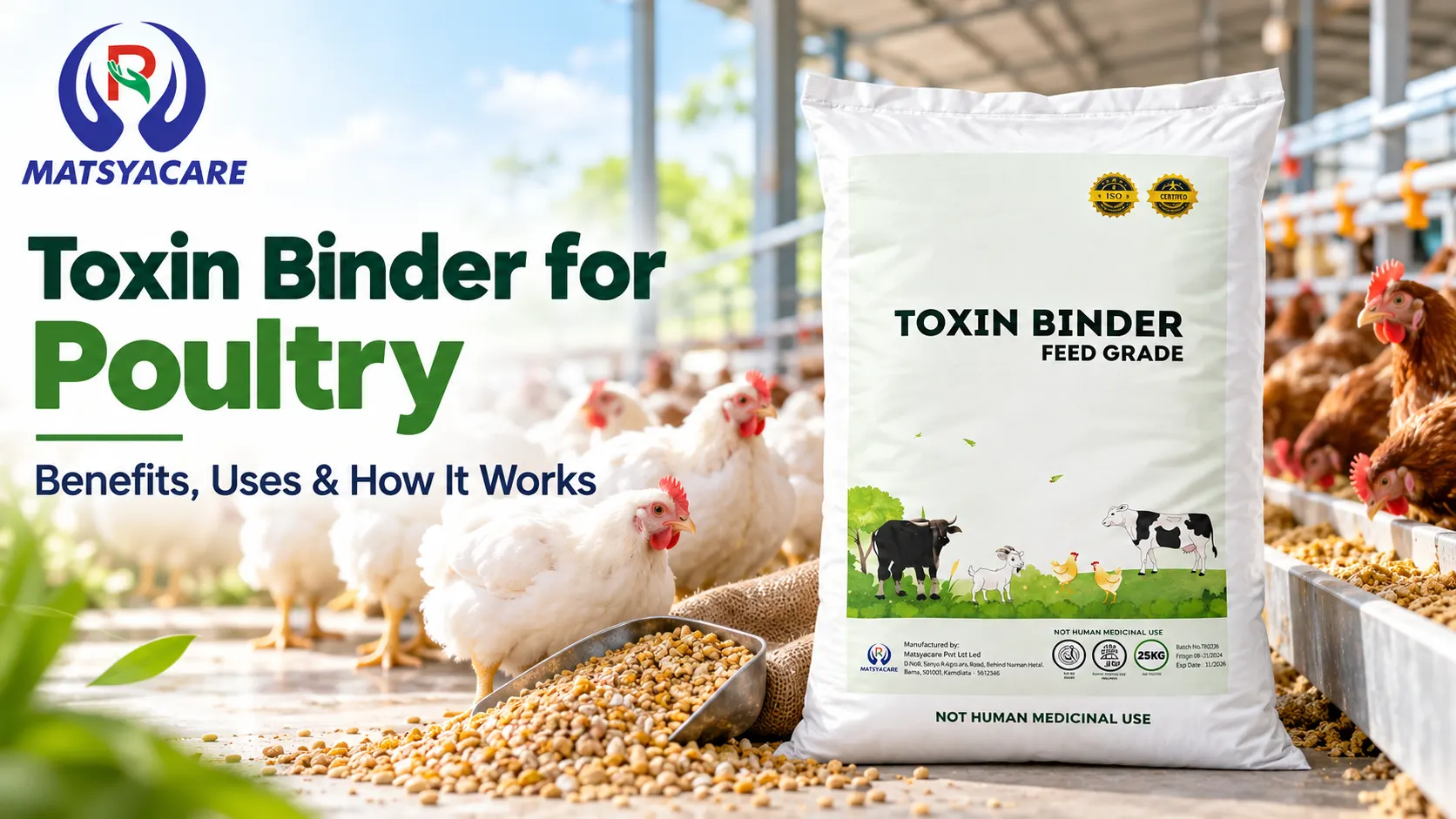
Good poultry feed should provide the right amount of energy, protein, vitamins, minerals and other nutrients. But feed ingredients such as maize, grains and oilseed meals can sometimes be affected by mould. Some moulds can produce harmful substances called mycotoxins. This is why a toxin binder for poultry may be used as part of a good poultry feeding programme.
A toxin binder is a feed additive that helps manage certain unwanted toxins that may be present in poultry feed. It is commonly used by poultry farmers, feed manufacturers and animal nutrition professionals as part of feed-quality management.
What Is a Toxin Binder?
A toxin binder is a feed additive used to bind certain unwanted toxins present in animal feed.
One of the main concerns in poultry feed is mycotoxins. These toxins can be produced by moulds growing on grains and other feed ingredients.
A suitable toxin binder can be added to poultry feed to help reduce the amount of certain toxins that are available to the bird.
It should be used along with good-quality feed ingredients, proper storage and regular feed checks.
What Are Mycotoxins in Poultry Feed?
Mycotoxins are unwanted substances produced by certain types of mould.
They can develop in crops and feed ingredients when moisture, temperature and storage conditions support mould growth.
They may be found in ingredients such as:
- maize
- wheat and other grains
- oilseed meals
- stored feed ingredients
- finished poultry feed
Not every mould problem can be seen easily. This is why proper sourcing, storage and feed-quality control are important in poultry farming.
Why Is Toxin Binder Used in Poultry Feed?
Poultry birds depend on good-quality feed for normal growth, health and production.
A toxin binder in poultry feed may be used when there is a risk that feed ingredients contain unwanted mycotoxins.
The binder can attach to certain toxins inside the digestive system. This may help reduce the amount that is available to the bird.
The result can depend on the type of toxin, the type of binder, the product formulation and the condition of the feed.
How Does a Toxin Binder Work?
A toxin binder works by attaching itself to certain unwanted toxins present in the feed.
In simple terms, the binder helps hold these toxins so that less of them can be absorbed by the bird.
The bound material can then move through the digestive system.
Different toxin binders may work in different ways, so it is important to choose a product that is suitable for poultry feed.
Benefits of Toxin Binder for Poultry
1. Helps Manage Mycotoxin Risk
One of the main reasons toxin binders are used in poultry feed is to help manage the risk of mycotoxins.
They can provide an extra level of support when feed ingredients may be exposed to mould or poor storage conditions.
2. Supports Better Feed-Quality Management
Good poultry nutrition starts with good-quality feed.
Toxin binders can be used together with proper raw-material selection, dry storage, feed testing and good farm management.
3. Useful in Poultry Feed Formulation
Poultry feed manufacturers may include toxin binders in feed formulations when there is a need to manage mycotoxin risk.
This makes toxin binders useful for commercial poultry farms as well as feed manufacturers.
4. Can Be Used in Broiler and Layer Feed
Suitable toxin binders may be used in both broiler and layer feeding programmes.
The correct product and amount should be selected according to the feed formulation and product instructions.
5. Supports Consistent Feed Management
Commercial poultry farms and feed manufacturers need consistent feed quality.
Using suitable feed additives along with proper storage and quality checks can help maintain a more controlled feeding programme.
Toxin Binder for Broilers
Broilers need balanced feed to support normal growth and development.
Feed quality is therefore very important in broiler farming.
A toxin binder may be considered in broiler feed when there is a possible risk of mycotoxin contamination.
It should not be used as a replacement for good-quality ingredients or proper feed storage.
Toxin Binder for Layers
Layer birds also need consistent and balanced nutrition throughout their production cycle.
Poor-quality feed can affect the overall feeding programme, which is why feed quality should be checked carefully.
A suitable toxin binder may be used in layer feed when mycotoxin management is required.
The product should always be used according to its recommended feeding instructions.
How Is Toxin Binder Used in Poultry Feed?
A toxin binder used in poultry feed is normally mixed into the feed according to the instructions given for the specific product.
The correct amount can depend on:
- the type of toxin binder
- the product formulation
- the type of poultry
- the feed ingredients being used
- feed-quality conditions
- manufacturer recommendations
There is no single dosage that is suitable for every toxin binder product.
Always follow the feeding instructions provided for the product. If needed, take advice from a poultry nutritionist, veterinarian or qualified feed professional.
Why Is Toxin Binder Important in Poultry Feed?
The importance of toxin binder in poultry feed is mainly related to managing the risk of unwanted mycotoxins.
However, a toxin binder should be only one part of a complete feed-quality programme.
Good feed management should also include:
- buying good-quality feed ingredients
- keeping feed and raw materials dry
- using clean storage areas
- protecting feed from moisture
- checking stored ingredients regularly
- testing feed when contamination is suspected
A toxin binder should not be used as a reason to feed visibly mouldy or poor-quality material to poultry.
When Can a Toxin Binder Be Used?
A toxin binder may be considered when poultry farms or feed manufacturers want an additional way to manage possible mycotoxin risk in feed.
It may be useful in situations such as:
- high humidity or moisture conditions
- poor storage conditions
- raw materials with a history of mould problems
- commercial poultry-feed production
- broiler feed programmes
- layer feed programmes
- feed formulations where mycotoxin management is required
The decision should depend on feed quality, ingredient condition and the complete poultry feeding programme.
Looking for a toxin binder for poultry for poultry feed manufacturing or animal nutrition applications?
Explore Toxin Binder for PoultryHow to Choose a Toxin Binder for Poultry
Choosing a toxin binder should not depend only on price or marketing claims.
The product should be suitable for the type of feed and poultry programme in which it will be used.
- Suitable for poultry feed: Choose a product made for animal-feed and poultry-feed use.
- Check product information: Review the technical details and recommended use of the product.
- Understand the formulation: Different toxin binders can contain different materials and may work differently.
- Look for consistent quality: Feed manufacturers need reliable quality from one batch to another.
- Check feed compatibility: The product should be suitable for mixing with the intended poultry-feed formulation.
- Follow proper guidance: Use the product according to the recommended instructions.
Toxin Binder and Proper Feed Storage
A toxin binder can help with toxin management, but proper feed storage is still very important.
Feed and raw materials should be stored in clean and dry conditions.
Storage areas should be checked for:
- water leakage
- high moisture
- damaged feed bags
- poor ventilation
- visible mould
Good storage and toxin management should work together.
Role of Toxin Binder in Poultry Feed Manufacturing
Commercial poultry-feed manufacturers use different grains, protein ingredients, minerals, vitamins and feed additives.
The quality of these ingredients can change depending on the source, season, transport and storage conditions.
A toxin binder may therefore be used as part of a wider feed-quality management programme.
Feed manufacturers and animal nutrition professionals can also explore Matsyacare's range of animal feed additives and supplements for poultry, livestock, swine and aquaculture feed applications.
Toxin Binder Manufacturers in India: What Should Buyers Check?
Feed manufacturers, poultry businesses and distributors looking for toxin binder manufacturers in India should check more than just the product name.
Important points to consider include:
- suitability for animal-feed use
- clear product information
- consistent product quality
- reliable supply
- proper packaging
- storage guidance
- support for commercial feed applications
For commercial buyers, regular quality and reliable supply can be important when selecting a toxin binder supplier.
Matsyacare provides Toxin Binder as part of its animal nutrition and feed-additive range for poultry and commercial feed applications.
Can Toxin Binder Replace Good-Quality Feed?
No.
A toxin binder cannot replace good-quality poultry feed.
It should not be used to make poor-quality or visibly mouldy feed suitable for feeding.
Good poultry nutrition should always begin with quality raw materials, proper storage, balanced feed formulation and regular feed checks.
A toxin binder is an additional tool that can be used when mycotoxin risk needs to be managed.
Frequently Asked Questions
What is a toxin binder for poultry?
A toxin binder for poultry is a feed additive used to help manage certain unwanted toxins, including some mycotoxins, that may be present in poultry feed.
Why is toxin binder used in poultry feed?
It is used as part of feed-quality management to help reduce the amount of certain unwanted toxins available to poultry birds.
How does a toxin binder work?
A toxin binder attaches to certain toxins in the digestive system and can help reduce the amount available for absorption.
Can toxin binder be used for broilers?
Yes. A suitable toxin binder may be used in broiler feed when mycotoxin management is required. It should be used according to the product instructions.
Can toxin binder be used for layers?
Yes. Suitable toxin binders may also be used in layer feeding programmes when required.
What is the importance of toxin binder in poultry feed?
Its main role is to support feed-quality management when there is a risk of unwanted mycotoxins in feed ingredients or finished poultry feed.
How much toxin binder should be added to poultry feed?
There is no single amount that is correct for every product. The correct quantity depends on the specific toxin binder, feed formulation and recommended product instructions.
Does toxin binder stop mould from growing in feed?
No. A toxin binder should not replace proper feed storage or mould prevention. Feed should still be kept clean, dry and protected from moisture.
Can toxin binder make mouldy feed safe?
A toxin binder should not be used to make visibly mouldy or poor-quality feed acceptable. Good-quality ingredients and proper storage should always come first.
What should I check when choosing a toxin binder manufacturer?
Check the product's suitability for poultry feed, technical information, quality consistency, packaging, supply reliability and intended feed application.
Conclusion
A toxin binder for poultry can be useful as part of a poultry feed-quality management programme when there is a risk of mycotoxins.
It may be used in broiler, layer and commercial poultry-feed formulations.
However, toxin binders should always be used together with good-quality ingredients, proper feed storage and balanced nutrition.
The right product and amount depend on the feed formulation, product instructions and intended poultry application.
Matsyacare provides Toxin Binder and other animal nutrition ingredients for poultry and commercial feed-manufacturing applications.